Age Against the Machine
There's a big difference between getting older and getting old.

Last weekend, a snowstorm dumped about a foot of snow on us. Naturally, it was the perfect time to stay off the roads, scroll TikTok, and check out the new Fortnite chapter while everyone else was out Christmas shopping and playing that seasonal game of “Am I in a lane?”
I have a confession: I love TikTok. I love the creativity, the questionable “life hacks,” the celebrity tea, the gym people, the animal sanctuaries — all of it.
All of it, that is, except the creators whose entire personality is “my generation.”
Particularly the Gen Xers who pop off about “neglected childhoods” and “tough as nails” rhetoric that is the exact opposite of what Gen X is supposed to embody: unbothered self-reliance.
Our whole schtick was that we endured whatever came at us and didn’t take ourselves too seriously.
And, at the risk of losing my membership card, a lot of you are aging yourselves just by talking like every generation before us about "the way things used to be."
I keep seeing the stitched Gen X "roll call" videos, all about how we toughened up, got paddled in school, how untouchable our movies are, how we managed without smartphones and safe spaces, drank from the hose, and most tellingly, how the kids today "just don't get it".
(Like Harvey Dent said, you either die a hero or live long enough to see yourself become the villain.)
And no, this isn’t me trying to claim the “I’m not like other moms, I’m a cool mom” vibe. I’m not defending or dragging any generation. Every age group passes down something extremely useful and something extremely…not. That’s the circle of life, Simba.
But the moment you treat younger generations, or pop culture itself, like they’re beneath you…
The moment “new” automatically equals “bad”…
The moment you decide progress threatens your identity…
That’s when you’re old. I don’t care what the number is. You’re old.
(Yes, I’m aware my ellipses habit is a Gen X stereotype. Guilty.)
And I’m not exempt, either.
I’m 50. By my genetic math, I’ve got maybe 25–30ish years left before I shuffle off the mortal coil. I’ve had unexplained arm pain for years, my knees crackle on the stairs, and everything is somehow louder now.
But thankfully, I haven’t hit the point where I dismiss something just because I didn’t grow up with it. And I honestly think that’s what actually keeps you from crossing into “old” territory.
I’m aging, I just don’t feel old.
Except for when I rode the Gravitron last summer. That was humbling.
Don’t worry, this isn’t about to become a dissertation on generational sociology. I’m far more qualified to pontificate on MCU character arcs than predict the fate of humanity.
All I’m saying is: there’s a visible difference between getting older and being older.
I see it in what I still put energy into.
I like feeling productive, like I actually did something of value with my day. I also like nerding out over the latest Fortnite drop, Marvel “leak,” or whatever rumor TikTok swears is true this week.
I didn’t grow up as “a gamer kid.” I was just an '80s kid who did everything - Barbies, G.I. Joe, bikes, skates, video games, and yes, drank from the hose, since that's apparently one of our other defining traits.
At the same time, I tore through books like candy. I was introverted, curious, and always immersed in some world or another.
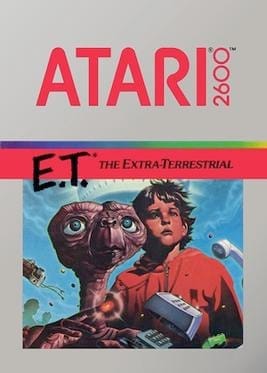
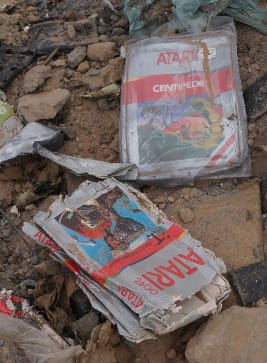
I still remember my first console: the Atari 2600, that wood-veneer block that collected dust in the grooves. I spent hours with Pole Position and Space Invaders, and far too long trying to master E.T., a game so notoriously bad they literally buried the cartridges in the desert.
Fast forward to adulthood, and fun became something squeezed in between marriage, parenting, and work, if I had the energy (I didn't).
After my divorce, I eased back into light gaming: Guitar Hero with my daughter, COD after she went to bed. And like every parent with a child raised during peak Marvel, we had our MCU bonding era. It’s our thing.
But she grew up, and I was convinced by then that I was “way too old” for gaming. I donated the console and went back to being responsible and boring.
Until Covid.
My husband and I were living in a cabin in the woods, my job came to a screeching halt, and I found myself reading and doing enormous jigsaw puzzles. (I. Love. Puzzles. Still have no idea why.)
Eventually, I realized I missed games, so the Balkan Storm thoughtfully bought me a pawn-shop Xbox for Christmas. My daughter and I started gaming long-distance, even streaming, and eventually she talked me into playing Fortnite.
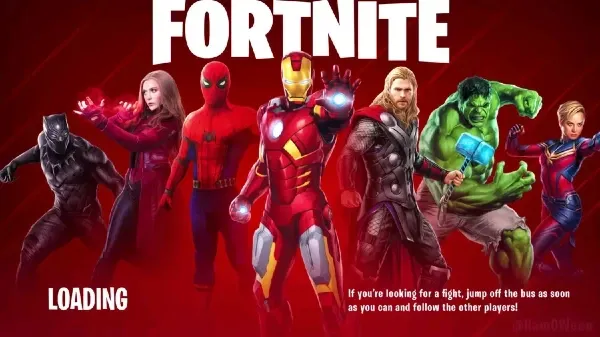
After much hesitation, I entered Chapter 2, Season 4 — the Marvel season.
How’s that for serendipitous?
She tried teaching me all the mechanics, but I just wanted to jump right into a game. "I learn by doing!" I popped off before (arrogantly) adding, "How hard can it be?"
Yeah.
I jumped straight into Stark Industries (because of course I did) and was immediately eliminated. Literally the first player out.
My daughter just shook her head because she did warn me.
But I learned, and we’ve been playing together ever since.
And then I eventually learned that with every new Fortnite chapter, Epic forces you to evolve; whatever worked for you last season, you now have to learn new weapons, mechanics, and strategies.
You can’t survive the game if you refuse to adapt.
It’s a solid business model, for sure.
It’s also a pretty accurate life principle: get good or get cooked.
If you’re still here, you’ll want the next one. Subscribe below.
I still use that old Xbox. My daughter and I are streaming again; we’re agile enough not to embarrass ourselves, but nobody's asking us for tips, either.
But that’s not the point anyway. It gives us something to do together, and it keeps me engaged in the current conversation instead of drifting away from it.
And I love being in that space of seeing what's growing, what's dying, and what's making a comeback.
Half the time it's weird, and sometimes it’s flat-out stupid, but at least it's never stagnant.
Next summer, I’ll be right in the middle of a pop-culture ecosystem at San Diego Comic-Con, surrounded by fans, creators, studio people, and the die-hards who camp out for Hall H as if it were a spiritual pilgrimage.
...which...it kind of is. And I'll be coming back with a full report.
Every generation shows up for the same reason: to see what’s next, because pop culture is more than just entertainment; it's literally a societal undercurrent.
...that sounded way deeper than it was supposed to, by the way...
Here's another generational dividing line: those who get prickly the second something familiar changes, and those bored with things not changing fast enough.
That divide is evident everywhere, particularly in fandoms. You can see it in every comment section the minute a studio updates a story, recasts an iconic role, or tries something that was never part of the origin story.
It's a commentary slap-fight of "how dare they!" and "finally!".
That push-and-pull is the heartbeat of pop culture.
Marvel, a cultural juggernaut built on reinvention, is the perfect example.
When Kevin Feige announced that the X-Men would be recast after Secret Wars, and that even legacy characters like Tony Stark and Steve Rogers might be recast someday, that reactional divide did not disappoint.
And I do get it.
I know that typcasting is usually an actor's worst nightmare, but damn it, some performances just set the standard.
I, for one, cannot imagine anyone other than the OG6 Avengers cast. I also don't want to picture anyone that isn't Patrick Stewart, Ian McKellen, or Kelsey Grammar in their roles.
However, the fact remains that these stories must continue to be passed down to new generations; otherwise, they’ll die out completely.
And nobody wants that, do they?
Avengers: Doomsday has already attracted more than its share of pre-emptive judgment, with too many fans blasting the choices and dooming (no pun intended) the film without even letting the changes prove themselves successful yet.
I also recently read that the team behind Doomsday is pulling back on the CGI and returning to mostly practical effects.
I’m not mad about it.
Medium is always evolving, and innovation involves that educated discernment of keeping the best of what works and burying the rest in the desert next to the E.T. cartridges.
So no, this is not me trying to be "young and cool" (Trust me, I've never been cool). I'm just trying to keep up and not stagnate.
This newest Fortnite season kind of proves my point. It's in its Hollywood era, giving us Kill Bill and Back to the Future, with past seasons offering Sarah Connor, Ellen Ripley, Indiana Jones… basically the entire Blockbuster aisle from 1987.
And music from Metallica and Eminem to BLACKPINK and Tyler, the Creator. It’s this weird, wonderful mashup that works.
That’s pop culture: nothing stays frozen in time, but nothing really disappears either. So if there's anything remotely close to resembling a fountain of youth, it's staying curious.
Pop culture is always changing, and I'd rather keep moving with it than park it in the comment section lecturing strangers about trauma and hose water.
If that makes me an elder-millennial-adjacent woman squinting at her Fortnite loadout and counting down to SDCC like it's the Super Bowl...
Well. There are worse things to be.
If you'd like to support the work, here's where to do it.
If this made sense to you, subscribe. If it didn’t, maybe the next one will.
I am nothing if not versatile.
Related Reads:
Movies: Escape or Compass?
How pop culture becomes a guide instead of a getaway.
Beautiful Lies
The daydreams that kept me alive and the life I made from them.
The Easiest 50 Pounds I Ever Lost
What real reinvention looks like when it stops being theoretical.
Heather Papovich is the voice behind Unfinished Business, a weekly essay series where real life meets pop culture, and how to get through both without (mostly) losing it.


.jpg)